Holburne Family Tree
William Holburne’s great grandfather
Sir James Holburne
1671 – 1737
The Holburnes were descended from Sir Thomas Holburne of the district of Tullibole, near Kinross, in the 15th century. His descendants moved to Menstrie, near Stirling, by the early 17th century. The family motto was Decus Summum Virtus, ‘the highest glory is virtue’.
James Holburne (d.1687) was in the army, reaching the rank of Major-General, and fought for the Parliamentarians in the Civil War, fighting at Newbury and Taunton. During the Commonwealth though he supported the Royalist and Scots armies against Cromwell’s invasion of Scotland. A Presbyterian, he was imprisoned for two years in Edinburgh Castle during the Restoration for religious non-conformity.
He bought Menstrie Castle in 1649, former home of the Alexander family. Sir William Alexander (d.1640), 1st Earl of Stirling, served James VI/I and Charles I and he founded and colonized Nova Scotia. This purchase by James Holburne added significantly to his lands and status.
His grandson James (c.1671-1737) was created the 1st baronet in 1706. He sold Menstrie Castle in 1719. His sons were James, 2nd baronet (d.1758), Captain William and Admiral Francis; James’ brothers and sons, James and Alexander, all served in the Navy.
Son of Sir James Holburne; William Holburne’s great-uncle
Captain William Holburne
? – 1760
Captain William Holburne served in the Navy. He achieved the rank of Lieutenant in 1739 and Captain of the Prince Frederick in 1748. He was the older brother of the Admiral and served under him in Nova Scotia in 1755 and 1757. William also served in the Mediterranean. He died at sea in 1760.
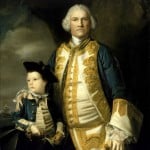
Son of Sir James Holburne; William Holburne’s grandfather
Admiral Frances Holburne
1704 – 1771
Francis was the third son of Sir James Holburne, 1st Baronet. He joined the navy in 1720 and was made a Captain in 1739. He served on ships in the Channel, Bay of Biscay, North Sea and West Indies. He commanded the Tavistock and was dispatched to the West Indies in 1748, returning in 1752. There he was Commodore and Commander-in-Chief of the Leeward Islands, he negotiated the de-fortification of Martinique and he married Frances Lascelles in Barbados in 1749.
He was appointed Rear Admiral of the Blue Squadron in 1755 and he was dispatched in the Terrible (the ship commanded by his brother Captain William) with reinforcements to meet Vice-Admiral Boscawen off Louisbourg, Nova Scotia. The blockade of Louisbourg was abandoned by the English ships.
The following year he served off Brest and in the Bay of Biscay. Early in 1757 he participated in the well-publicised court martial of Admiral Byng, who had been sent to relieve the garrison at Port Mahon on Minorca, under siege from the French, but had been unsuccessful. He was promoted to Vice Admiral of the Blue Squadron and was sent (in the Newark, captained by his brother William) with a fleet to Louisbourg, which proved an unsuccessful mission; his ships were damaged in a storm and he returned home. He never went to sea again.
He was Port Admiral at Portsmouth from 1758-66, responsible for the running of the port. He became MP for Stirling in 1761 and Plymouth in 1768. Francis received his final promotion in the Navy in 1770, becoming Admiral of the White and Rear Admiral of Great Britain.
He retired and was made Governor of Greenwich Hospital in 1771, where he died. His portrait by Reynolds of 1757 was bequeathed by Sir William Holburne to Greenwich and remains there today (it currently hangs in the Queen’s House).
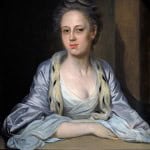
Wife of Admiral Frances Holburne; William Holburne’s grandmother
Frances Lascelles
1719 – 1761
Frances was the daughter of Guy Ball (c.1686 to after 1722) and grew up in Barbados. Guy Ball seems to have been a London merchant who moved to Barbados and invested in plantations there. Other members of the Ball family were landholders in Barbados. Frances had two siblings: Sarah and Chapman Ball. Sarah and Frances were close. Sarah married a Mr Huxley. She died in 1785 and the beneficiaries of her will were her Holburne nieces Jean Sheldon and Catherine Cussans.
Frances’ first husband was Edward Lascelles (1702-1747). He was Collector of Customs in Barbados and they married in 1732; she would have been age 13 and he was 30. Edward’s older half-brother Henry Lascelles (1690-1753) had been Collector of Customs in Barbados before returning to England with his family where he was involved in politics and became a director of the East India Company.
Frances’ children by Edward Lascelles who survived into adulthood were Edward (1739/40-1820), Francis and Frances. The eldest, Edward, inherited the Lascelles family estates in 1795 on the death of his cousin Edwin (son of Henry above) and he was created 1st Earl of Harewood in 1812.
Frances’ second husband was Admiral Holburne. The married in 1749 in Barbados. Their children were Jean (b.1750; m. Ralph Sheldon, children: one son and three daughters), Francis (Sir Francis, 4th Baronet) and Catherine (Cussans). Catherine, their youngest child, was born after their return to London. The Holburne children were brought up with their Lascelles half-siblings. Catherine was particularly close to her half-brother Edward Lascelles.
Frances died at the Hot Wells in Bristol, which she was visiting for her health. Admiral Holburne intended to commission Roubiliac to carve a memorial to her in Richmond church and the Admiral wrote the inscription. The memorial was in fact executed by Benjamin and Thomas Carter. The Admiral was buried next to his wife.
Her portrait hangs in the Ballroom on the first floor of the Holburne.
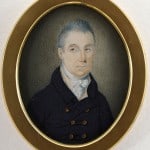
Son of Admiral Frances Holburne and Frances Lascelles; father of William Holburne
Francis Holburne
1752 – 1820
Francis Holburne, 4th Baronet of Menstrie, inherited the family title from his cousin Sir Alexander, 3rd Baronet, in 1772.
Francis married Alicia (or Alice) Brayne (1766-1829) in 1786 and they lived in Lower Sketty near Swansea. They moved to Bath in 1801 to Lansdown Crescent (now 7 Lansdown Place West), where their family connection to the Lascelles would have been socially important.
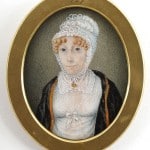
Wife of Francis Holburne; mother of William Holburne
Alice Brayne
1766 – 1829
Alice married Francis Holburne in 1786. Very little is known about Alice and two of their daughters, Alicia (1789-1871) and Catherine (1792-1873).
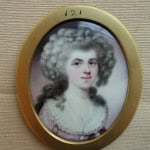
Daughter of Admiral Frances Holburne and Frances Lascelles; William Holburne’s aunt.
Catherine Cussans
1753 – 1834
Catherine Cussans (nee Holburne) was Sir William Holburne’s paternal aunt. She was the daughter of Admiral Holburne and Frances Lascelles and younger sister of Sir Francis Holburne, 4th Baronet (William’s father). She was half-sister to the 1st Earl of Harewood as a result of her mother Frances’ first marriage to Edward Lascelles in 1732.
Catherine was close to her nephew William Holburne and he stayed with her at her home at 27 Hill Street, Berkeley Square. Letters survive between Catherine, her brother Francis, and her nephews Francis (Frank) and William. The letters suggest a close and fond relationship between them. Catherine collected, amongst other things, porcelain and it seems likely that her collection played some part in shaping the tastes and interests of her nephew William.
Proceeds of the sale of Catherine’s estate went into a trust fund for William and his sisters. Presumably it was one of the factors that allowed William to collect art. After their deaths, it passed to Catherine’s sister Jean Sheldon’s descendants. When they died out around 1906 the money passed to the Trustees of the Holburne Museum. It was these funds which purchased the Museum’s current building on Great Pulteney Street.
Husband of Catherine Holburne
Thomas Cussans
1737 – 1796
Catherine Holburne married Thomas Cussans (1737-1796) at St George’s, Hanover Square, London in 1775. He was born in Jamaica. The Cussans family were possibly descended from the de Cusance, French nobles. The first Cussans emigrated to the West Indies in the seventeenth century.
Thomas was the fourth generation owner of Amity Hall, a sugar plantation at St Thomas-in-the-East, Jamaica. Educated at Westminster School and Oxford, he returned to Jamaica to run his plantations and was also a member of the Jamaican Assembly. He sold land in Jamaica in 1773, after which he presumably returned to London in order to marry.
As for Thomas Cussans’ money, he had co-inherited his father’s sugar plantation with his brother John (1742-77). John’s son Thomas (d.1855) was in the army and squandered the remaining plantation money. He auctioned off pictures in 1800 including works by Rembrandt and Bruegel. His younger brother John (c.1773–1861) was a comic actor, drinking club entertainer and composer of popular songs who died at sea ‘well fortified with brandy’.
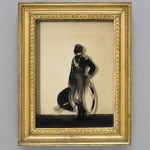
Son of Francis Holburne and Alice Brayne; Brother of William Holburne
Francis
1788 – 1814
Sir Francis’ eldest son. Frank joined the army, the 3rd Regiment of Foot Guards, in 1806 aged 17; he achieved the rank of Captain in 1813. He fought in the Peninsular Campaigns during the Napoleonic wars, serving in Spain under Wellington and crossing into France in 1813. There he was involved in the blockade of the city of Bayonne in early 1814. Meanwhile, Wellington inflicted defeats at Orthez and Toulouse and Napoleon abdicated. The Governor of Bayonne dismissed the news of Napoleon’s defeat as rumour and attacked the Allied forces on 14 April.
Frank was injured by a musket ball to the foot. He died of tetanus on 23 April, aged 25. Frank asked that his sword and sash were ‘to be sent to my brother’. Frank’s death meant that his brother William became his father’s heir.
His sword and silhouette portrait can be viewed in the Fletcher Gallery on the first floor.
Daughter of Francis Holburne and Alice Brayne; sister of William Holburne
Alicia
1789 – 1871
Unfortunately we know very little about Alicia, except that she remained unmarried and lived with her siblings at 10 Cavendish Crescent.
Daughter of Francis Holburne and Alice Brayne; sister of William Holburne
Catherine
1792 – 1873
We know little about Catherine, who also remained unmarried and lived with her siblings at 10 Cavendish Crescent.
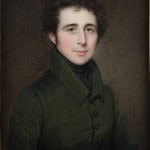
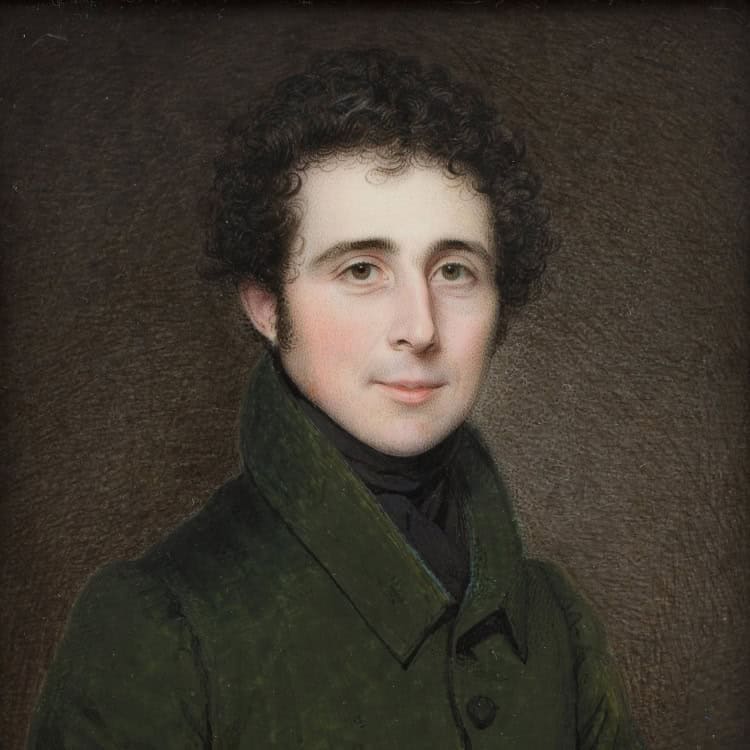
Son of Francis Holburne and Alice Brayne. Founder of the Holburne Museum
William
1793 – 1894
Younger son of Sir Francis, known as William. He joined the navy in 1805 aged 11 and served at the Battle of Trafalgar aboard the Orion. He also served on the Tonnant in the West Indies in 1808 and on the Foudroyant in Brazil. Made a Lieutenant in 1813, he was probably pensioned off from the navy after 1815 at the end of the Napoleonic Wars.
He inherited on his father’s death in 1820 and undertook a Grand Tour of post-Napoleonic Europe in 1824-5 including Italy and the Netherlands. This was formative in terms of developing and defining his taste as a collector of art. Very little remains as evidence of his collecting – no letters, bills or accounts – so very little knowledge of where his acquisitions came from.
We can deduce from the the objects that he collected that, in very general terms, Sir William’s taste was for the small, the finely wrought and often the colourful (see, for example, Romanelli’s Entombment below).
Part of the reason for the small and delicate nature of much of the art that Sir William collected is the intended setting for his purchases. Following the death of his mother in 1829, William and his three sisters moved to 10 Cavendish Crescent, a new terrace with the house ranged across three floors with an attic above. We know from the inventory of the contents of the house taken on Sir William’s death in 1874 how the collection was arranged throughout the house. The small size of many of the works suited the compact nature of the house and would have been a practical choice.
Sir William’s taste was eclectic and his collection includes Renaissance bronzes, maiolica, gems, silver, porcelain, paintings, miniatures and books.
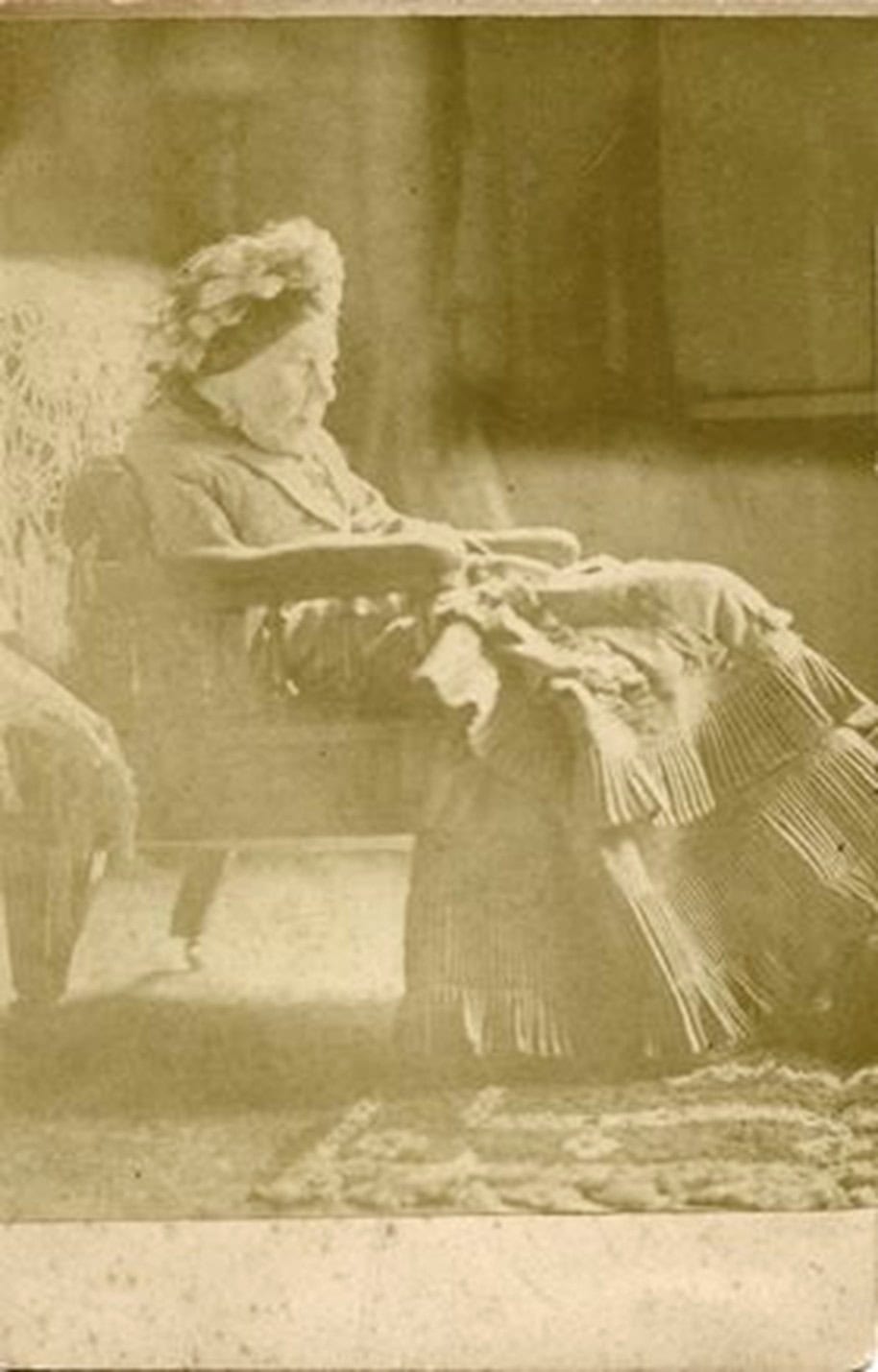
Daughter of Francis Holburne and Alice Brayne; sister of William Holburne
Mary
1802 – 1882
Mary Anne Barbara, William’s youngest sister, helped to establish Bath’s first art museum.
On her death she left William’s art collection and her estate to Trustees to found the Holburne Museum. The museum opened in 1893 in premises in Charlotte Street off Queen Square. It remained there, in its rather cramped accommodation, for over twenty years until money left by Catherine Cussans allowed the museum to move to its new home on Great Pulteney Street.
Our Collection
Search the Collection
Visit Search the Collection
Caring for the Collection
Visit Caring for the Collection