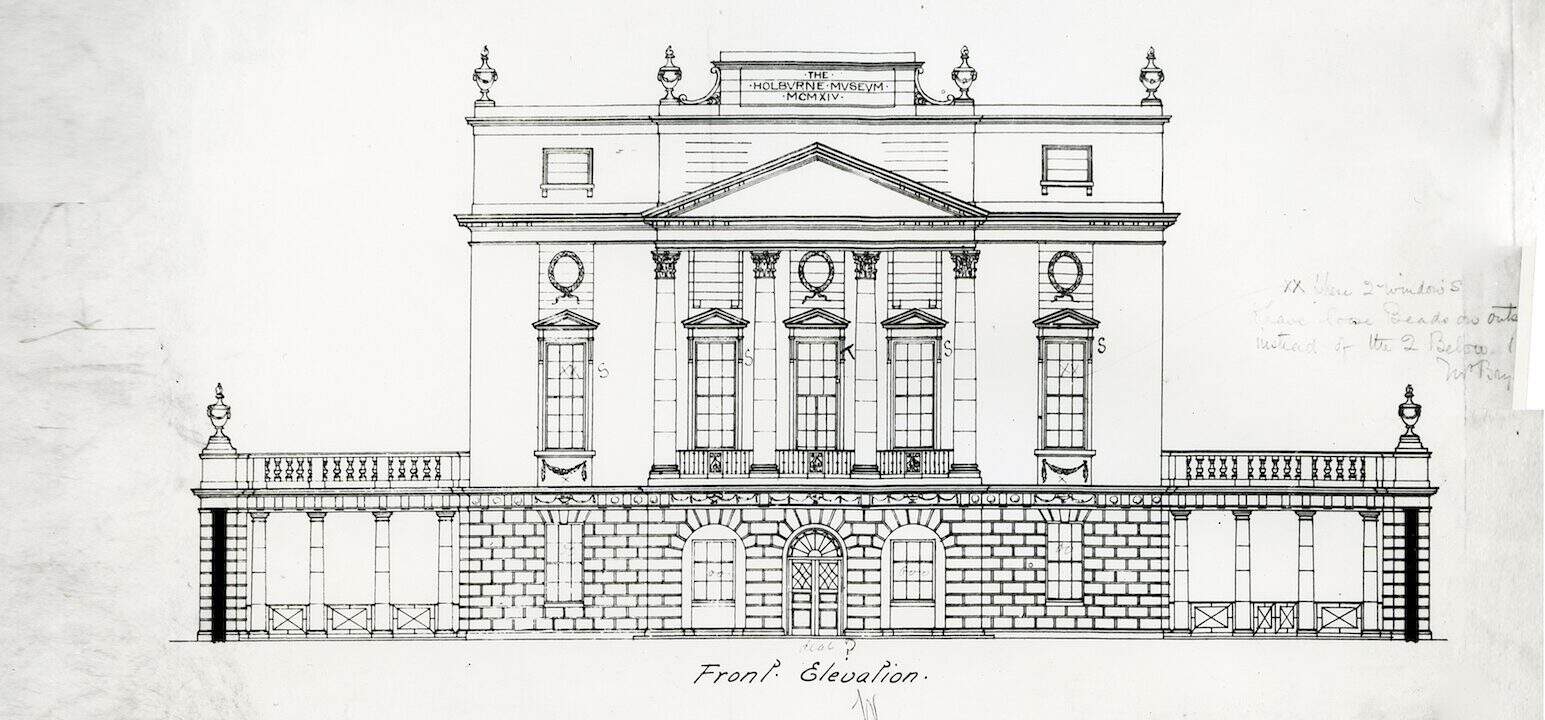
The Holburne is one of Bath’s most beautiful Georgian buildings.
It was never a private home however; our building started life as the Sydney Hotel, built in 1796-99 as the centrepiece of the planned ‘Bath New Town’ over Pulteney Bridge. These plans were never fully realised, but the Hotel formed the centrepiece between Great Pulteney Street and Sydney Pleasure Gardens.
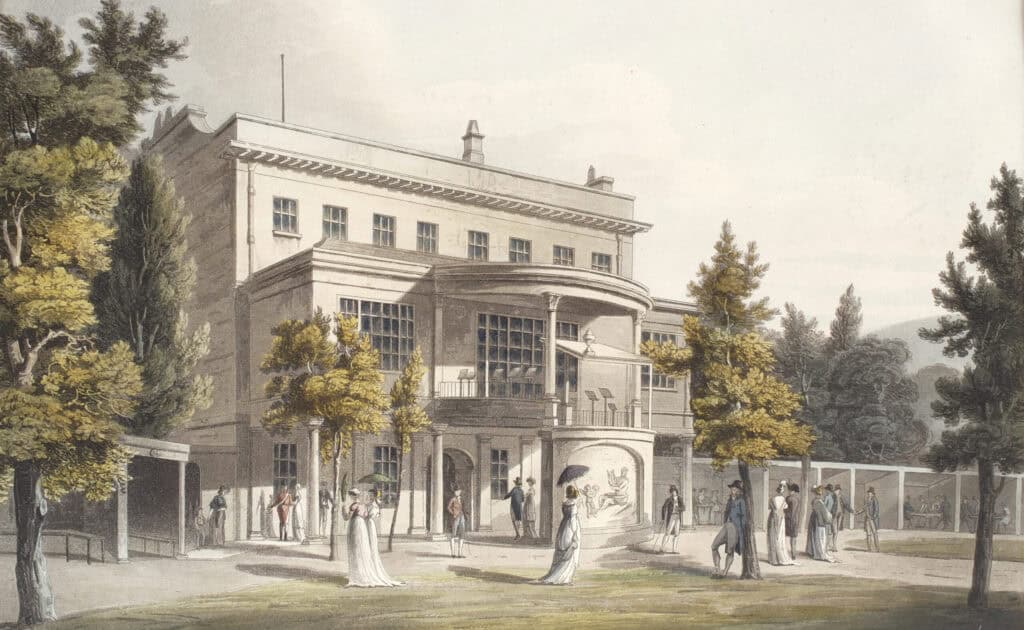
Visitors to the gardens would enter through the arches of the Hotel and discover an array of attractions including a labyrinth, a mechanical swing, an aviary, and supper boxes in which to take tea, to dine and to watch the world pass by.
JC Nattes, Rear Elevation of the Sydney Hotel, watercolour, 1805
Inside the Hotel, you could play cards, gamble and drink, or attend dances in the grand ballroom.
The building opened in 1798, when it was described as ‘an elegant new-built tavern containing a banqueting room, coffee and billiard rooms, elegant orchestra and every other requisite for genteel accommodation.’
In 1840, Brunel’s Great Western Railway cut through the gardens which eventually led to their decline. The Hotel became the Bath Proprietary College from 1853 – 1880, but then lay empty until it was bought by the Holburne Trustees in 1912.
Architect and historian Reginald Blomfield was appointed to transform the building into a museum. He opened up the interior to create two grand galleries; the Picture Gallery on the top floor, and the Ballroom on the first floor. The Holburne Museum opened its doors in its new home in 1916.
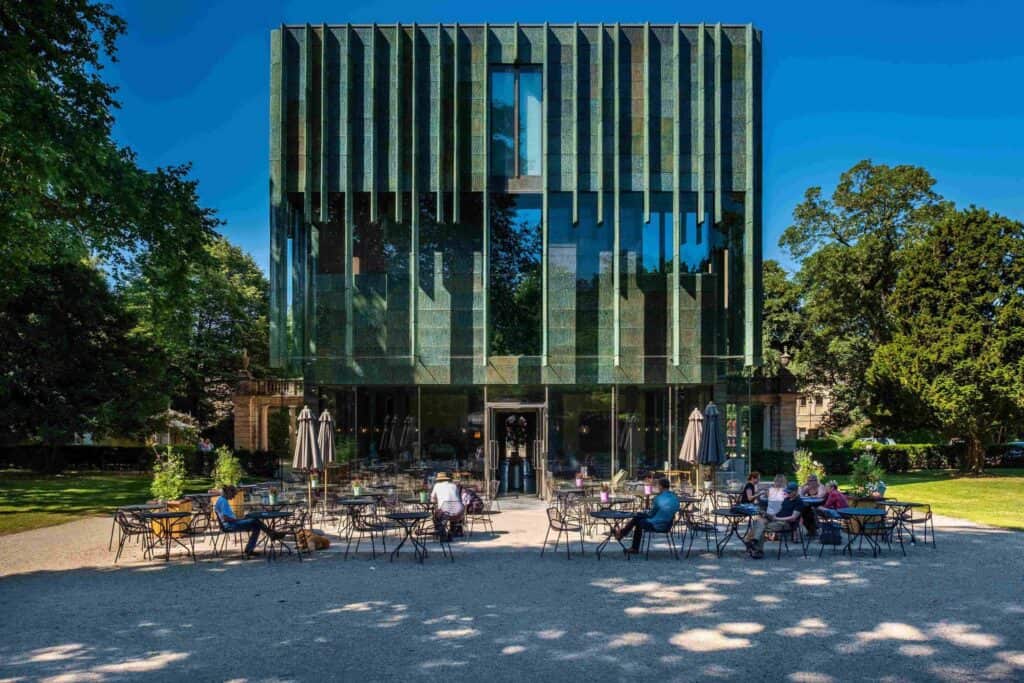
By the end of the twentieth century, the Museum collection had expanded and it was outgrowing its home. In 2011 the new extension opened at the rear, designed by architect Eric Parry RA.
Ceramic tiles clad the modern exterior, inspired by the rich collection of ceramics inside the Museum, and provide a bold contemporary face to towards the Park:
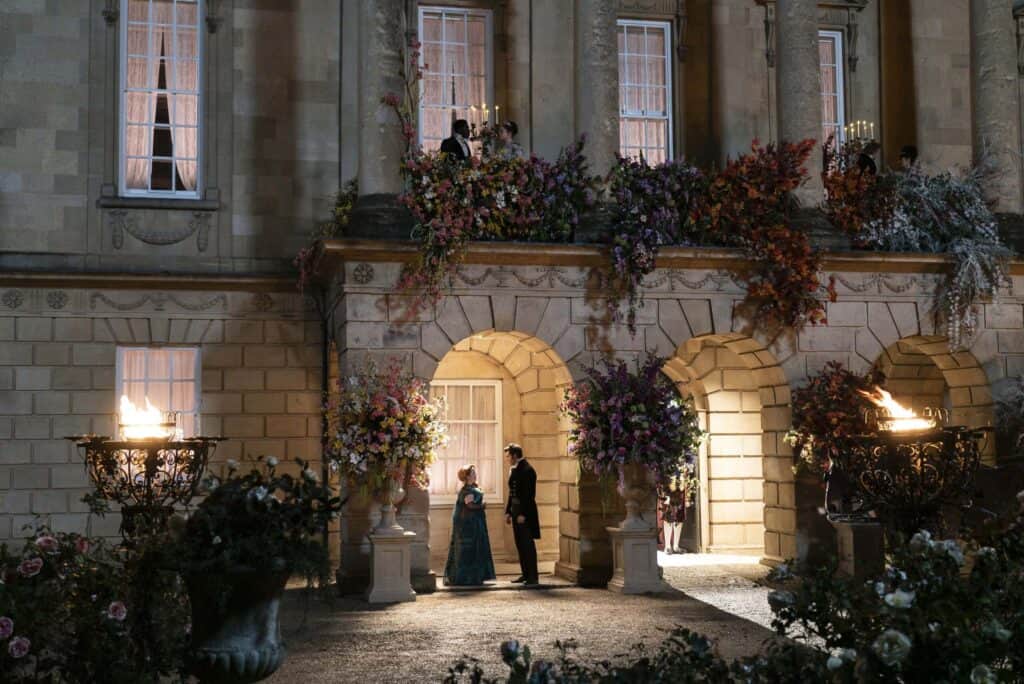
In recent years, the Museum’s façade has been used as the filming location for several films and TV series, most notably ‘Lady Danbury’s House’ in the popular Netflix series, Bridgerton:
Holburne facade in Bridgerton series 3. Image courtesy Netflix